
Select Dental Implants · Menifee, CA
Dental Implants in Menifee, CA
Permanent, natural-looking tooth replacement — planned in 3D and placed by a team that focuses on implants every day.

95%+
long-term success rate for healthy patients
30–60 min
typical placement time for a single implant
20+ yrs
documented implant lifespan with good care
What a Dental Implant Actually Is
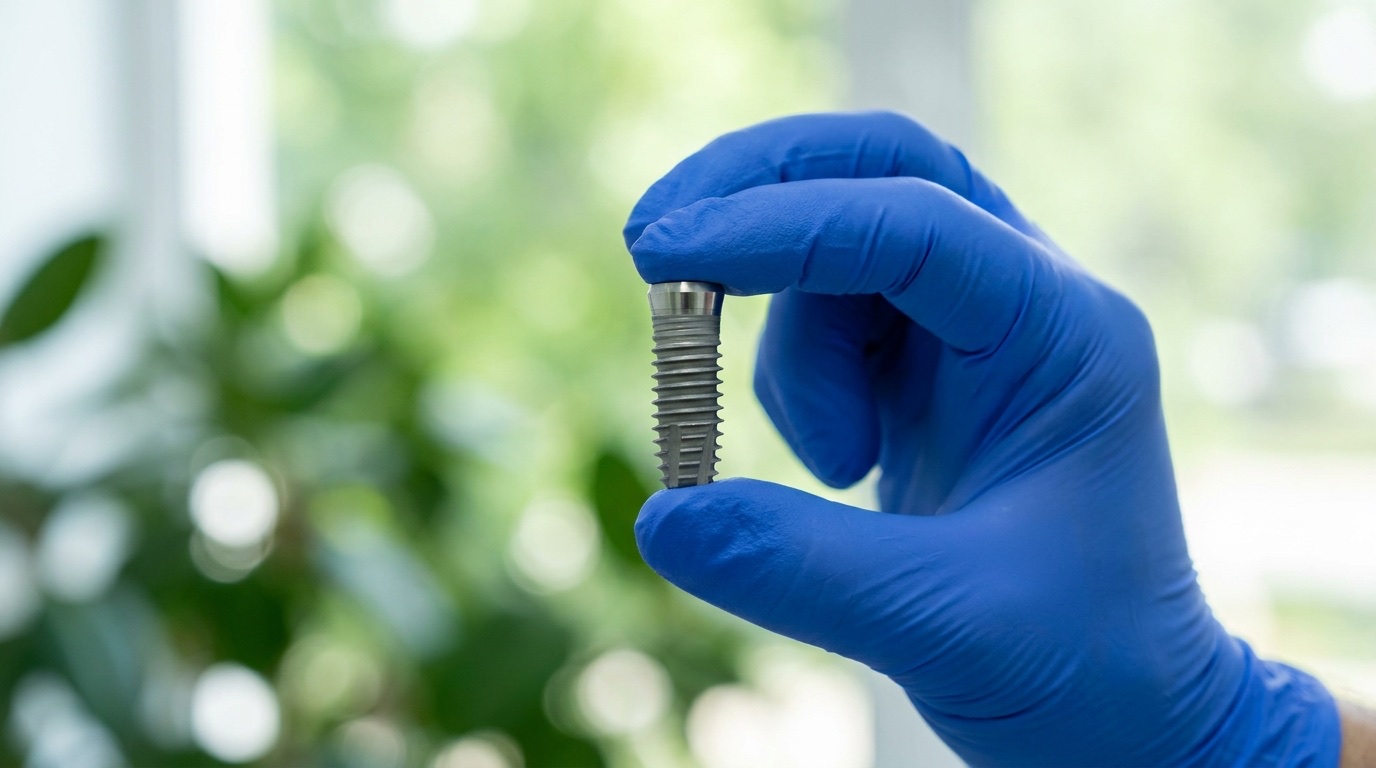
A dental implant is a small titanium post that replaces the root of a missing tooth. Your jawbone fuses to it in a process called osseointegration, creating an anchor as stable as a natural root. A custom abutment and porcelain crown complete the restoration — no slipping, no altering healthy neighboring teeth, no daily removal.
Because the implant stimulates the bone the way a natural root does, it also prevents the slow jawbone shrinkage that follows tooth loss — the reason long-time denture wearers develop a sunken facial appearance.
- Single tooth — one implant, one crown; neighboring teeth stay untouched
- Several teeth — implant-supported bridges replace multiple teeth on fewer posts
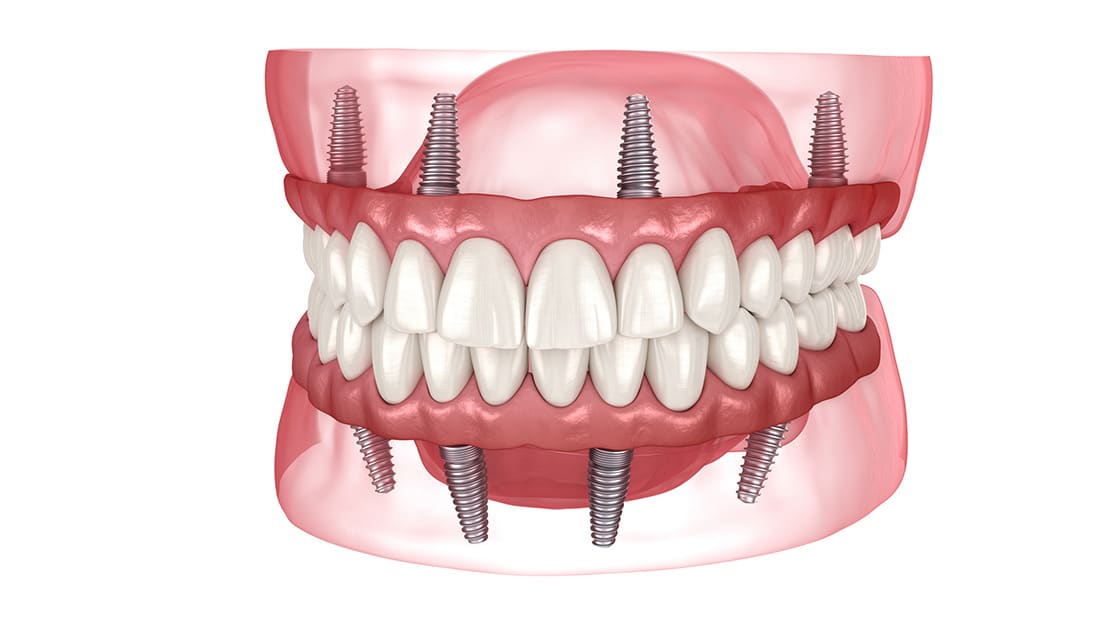
- A full arch — All-on-4® full-arch implants or implant-supported dentures
The Types of Implant Treatment We Provide
Dental implants are small anchors made of biocompatible titanium, placed in the jawbone to replace missing tooth roots. After placement, the anchors fuse with your bone over a few months — osseointegration — and abutment posts then allow permanent attachment of the replacement teeth.
Every configuration is available here, matched to how many teeth you’re replacing:
- Single dental implant — one titanium anchor, one custom crown; neighboring teeth untouched
- Implant-supported bridge — typically two implants supporting three or more adjacent missing teeth, without stressing your natural teeth
- Implant-retained dentures — snap onto two or more implants; removable at night for cleaning
- Fixed full-arch implant bridge — a full arch on 4–6 anchors; for qualifying patients, extractions and a temporary arch can be completed the same day
- Guided implant placement — 3D-planned, minimally invasive techniques that improve comfort and healing
Why Implants Matter Beyond the Smile
Once a tooth is lost, bone loss in the jaw begins — it can compromise neighboring tooth roots and stability, and it’s a large part of the “sunken” look in people who’ve lost several teeth. It’s also why long-time denture wearers find their dentures harder and harder to fit.
Implant placement helps generate bone growth around the implant, strengthening the jaw and helping prevent future bone loss. That’s the health case for implants: they preserve the health of neighboring teeth, maintain bone structure, restore full chewing ability, and give you back the confidence to smile.
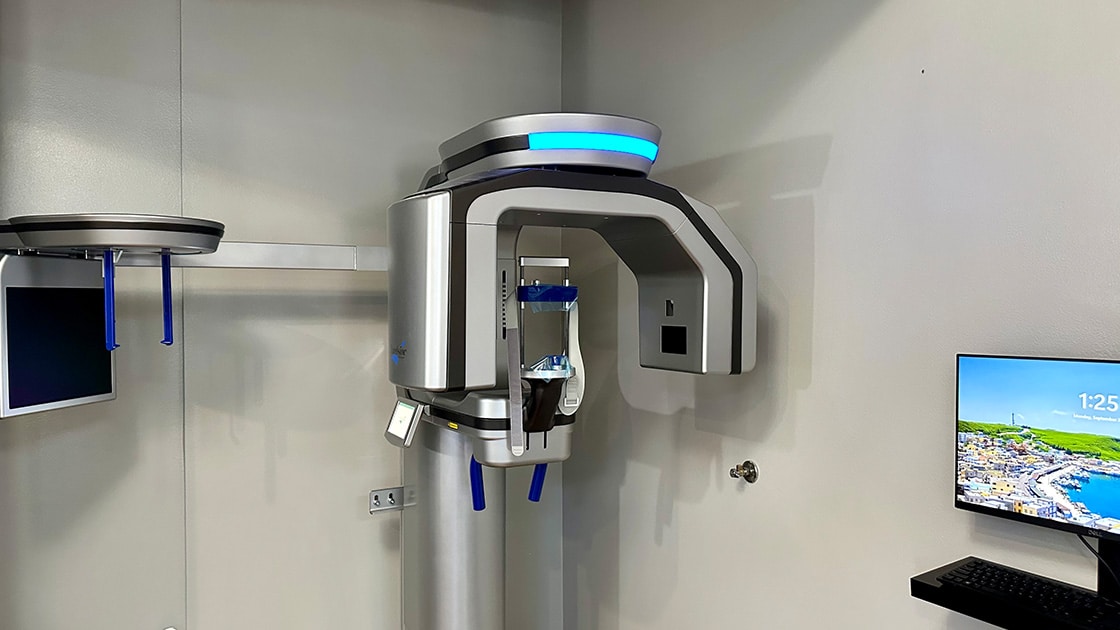
- 3D cone-beam scan and digital treatment plan on every case
- Guided placement, usually 30–60 minutes per implant
- 3–6 months of integration while bone fuses to the post
- If bone is lacking: grafting and sinus lifts performed in-house
Why Select Dental Implants
Menifee’s Dedicated Dental Implant Practice
Questions Patients Ask Us
How painful is getting a dental implant?
The placement itself is done under local anesthesia, so you feel pressure and vibration but not pain. Afterward, most patients describe soreness of about 2–4 out of 10 that peaks in the first 24–48 hours and is managed with over-the-counter medication. Many say recovery is easier than a tooth extraction.
How long does the dental implant process take?
Placing a single implant usually takes 30–60 minutes. The implant then fuses with your jawbone over 3–6 months (osseointegration) before the final crown is attached. Start to finish, plan on 3–12 months depending on whether extractions or bone grafting are needed first.
What disqualifies someone from getting dental implants?
Active gum disease, uncontrolled diabetes, certain medications such as IV bisphosphonates, heavy smoking, and insufficient jawbone are the main issues. Most are treatable — infections can be resolved and bone can be rebuilt with grafting — so a disqualifier today is often not permanent.
How long do dental implants last?
The titanium post is designed to be permanent, and long-term studies show the large majority of implants still functioning past 20 years. The visible crown typically needs replacement after 10–15 years of normal wear. Daily hygiene is what protects the implant itself.
What is the most common cause of implant failure?
Peri-implantitis — a bacterial infection of the gum and bone around the implant, similar to gum disease. It’s most often triggered by plaque buildup or smoking, which is why home care and regular maintenance visits matter so much.
Am I too old for dental implants?
No. There is no upper age limit — success rates for healthy seniors are over 95%, on par with younger patients. Overall health, medications, and bone density matter far more than the number on your birthday.

Ready for a Smile That Feels Like You Again?
Call (951) 672-6788 or request a consultation online. We’ll take a 3D scan, review every option honestly, and give you a clear plan with transparent pricing — no pressure, no surprises.