A single dental implant typically takes 3–6 months from placement to final crown; add extractions or grafting and the full journey runs 6–12 months. Here’s the honest, stage-by-stage schedule.
Stage by stage
Consultation & 3D scan (week 0): bone measured, plan built, itemized quote delivered
Preparatory work (if needed, +2–4 months): extractions and/or grafting, which heals before or alongside placement
Implant placement (1 visit, 30–60 min per implant): often with a temporary tooth the same day
Osseointegration (3–6 months): bone fuses to the post — the stage that cannot be rushed
Abutment & impressions (1–2 short visits): the connector placed, digital impressions taken
Final crown or bridge (2–3 weeks later): custom-made, fitted, done
What speeds it up — and what doesn’t
Good bone, non-smoking, and controlled health conditions shorten timelines; immediate-load protocols compress the visible wait by attaching fixed temporaries on surgery day. What never safely compresses is biology: ads promising permanent teeth in a week are describing temporaries — the bone still takes its months. Plan around the honest schedule and the result lasts decades.
Wondering what this means for your own case? A consultation at Select Dental Implants includes a cone-beam 3D scan and an honest, itemized answer — call (951) 672-6788 or request an appointment.
Implant surgery under local anesthesia alone is painless — but comfort and calm are different things. Sedation options range from nitrous oxide (relaxed, fully awake, drive yourself home) to oral conscious sedation (deeply calm, little memory of the visit).
The ladder, honestly explained
Local anesthesia only: completely numb; you feel pressure and vibration. Right for single implants and calm patients
Nitrous oxide: takes the edge off within minutes and wears off before you leave — the everyday favorite
Oral conscious sedation: a prescribed sedative before your visit; you respond to instructions but most patients remember almost nothing. Requires a driver
IV sedation / general anesthesia: for select complex cases and severe anxiety, coordinated with an anesthesia provider
Matching the level to you
The right choice depends on the procedure length, your health history and medications, and — honestly — how you feel in a dental chair. Fear is the most common reason people live with failing teeth for years; naming it at your consultation is how we solve it. More on our approach: sedation dentistry at Select.
Wondering what this means for your own case? A consultation at Select Dental Implants includes a cone-beam 3D scan and an honest, itemized answer — call (951) 672-6788 or request an appointment.
Implants in Mexico or Turkey can cost 50–80% less up front — and for straightforward cases with reputable clinics, some patients do fine. The risk isn’t the surgery day; it’s everything after: follow-up care, complications handled from 1,500 miles away, and revision costs that erase the savings.
Questions the brochure doesn’t answer
Who manages a complication two months later — and at what cost, in which country?
What implant system was placed, and can a local dentist source matching parts? (Unknown hardware is the #1 headache in rescuing tourism cases)
Was there a cone-beam scan, or same-week surgery on a walk-in?
Full-arch in a week often means shortcuts on healing time that US protocols deliberately avoid
The honest comparison
A failed or failing implant costs more to revise than it cost to place — grafting back lost bone, removing failed hardware, redoing the restoration. That’s the number to weigh against the airfare savings. If budget is the driver, ask us about phased treatment, financing, and overdenture options that lower cost without lowering the standard — the full picture is in our 2026 cost guide.
Wondering what this means for your own case? A consultation at Select Dental Implants includes a cone-beam 3D scan and an honest, itemized answer — call (951) 672-6788 or request an appointment.
No single vitamin rebuilds bone — bone health is a team sport between vitamin D (absorbs calcium), vitamin K2 (directs it into bone), calcium itself, magnesium, and protein. What you limit matters too: excess sodium, cola, alcohol, and smoking all work against bone density.
The support crew for healing bone
Vitamin D: without it, dietary calcium largely passes through — most implant patients benefit from having levels checked
Calcium: dairy, fortified alternatives, leafy greens, canned salmon with bones
Vitamin K2 & magnesium: help route calcium to the skeleton and activate vitamin D
Protein: the collagen scaffold of bone is protein — critical while a graft or implant heals
Cola-type sodas (phosphoric acid) correlate with lower bone density
Heavy alcohol disrupts bone remodeling
Smoking is the single worst habit for jawbone and for implant success
None of this replaces treatment when bone is already deficient — that’s what grafting is for. But good habits make every graft and implant heal on friendlier terrain. Discuss supplements with your physician before adding them.
Wondering what this means for your own case? A consultation at Select Dental Implants includes a cone-beam 3D scan and an honest, itemized answer — call (951) 672-6788 or request an appointment.
The 3-2 rule is a spacing guideline in implant dentistry: keep roughly 3 millimeters between two implants and 2 millimeters between an implant and a natural tooth. Those few millimeters preserve the blood supply that keeps bone and gums healthy around your new tooth.
Why millimeters matter
Blood supply: bone between implants needs room for vessels; crowd it and it recedes
Gum aesthetics: adequate spacing lets the gum form natural-looking contours between teeth instead of dark triangles
Cleanability: properly spaced implants can be flossed and brushed like teeth — tight ones trap plaque
Longevity: spacing errors are a quiet contributor to the bone loss behind late implant failures
What this means when choosing a provider
You’ll never measure this yourself — which is the point. Rules like 3-2 are why implant placement rewards experience and 3D planning: on a cone-beam scan, spacing is measured digitally before surgery rather than estimated during it. It’s a good interview question for any implant consult: ‘How do you verify spacing and angulation before you drill?’
Wondering what this means for your own case? A consultation at Select Dental Implants includes a cone-beam 3D scan and an honest, itemized answer — call (951) 672-6788 or request an appointment.
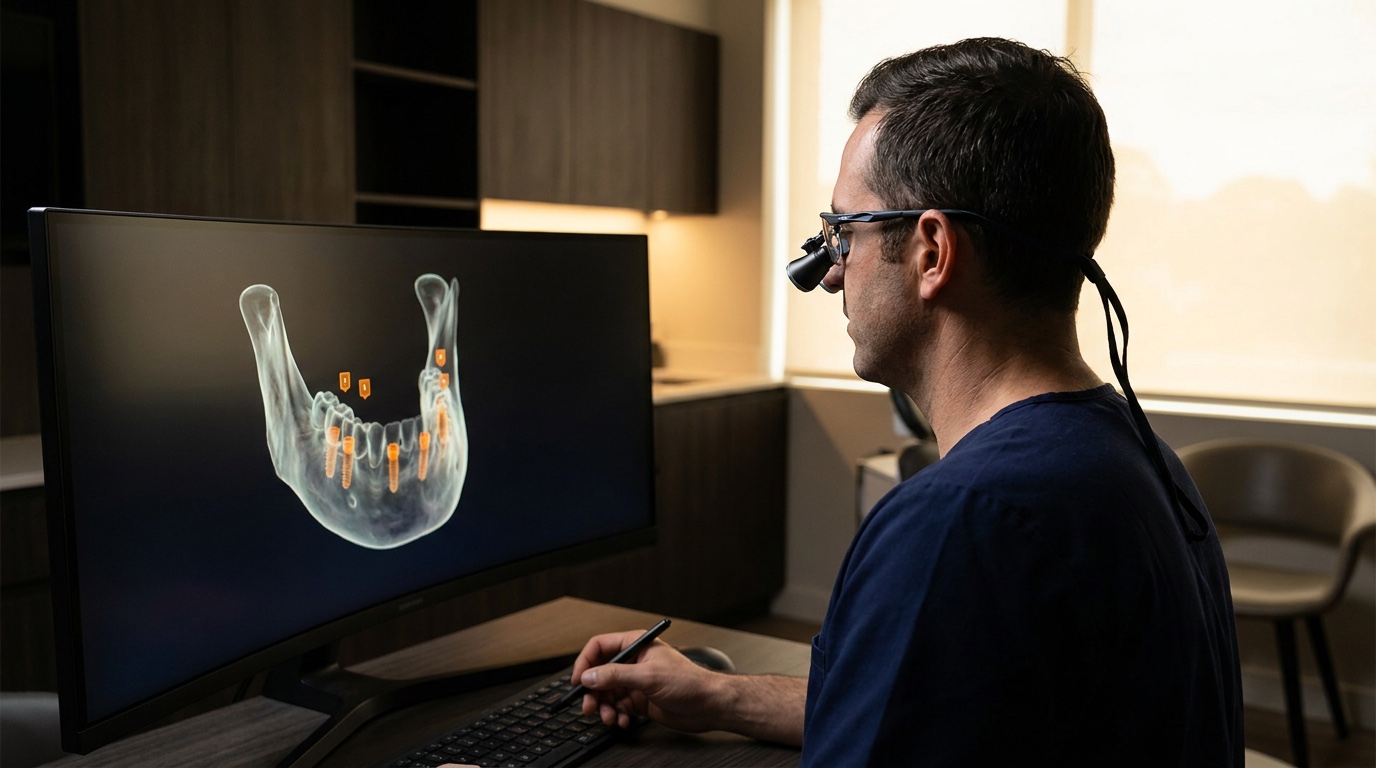
Computer-guided implant surgery uses a cone-beam CT scan and digital planning to decide an implant’s exact position, angle, and depth before surgery — then transfers that plan to your jaw with a printed surgical guide. The payoff: millimeter accuracy, smaller surgical sites, and fewer surprises.
Freehand vs. guided — the honest comparison
Experienced surgeons place excellent implants freehand every day. What guided surgery adds is repeatability at the edges: sites near nerves and sinuses, narrow ridges, multiple implants that must align for one bridge, and full-arch cases where four implants carry every tooth. That’s why we scan and digitally plan every case — and use guides where they add real safety.
What it looks like as a patient
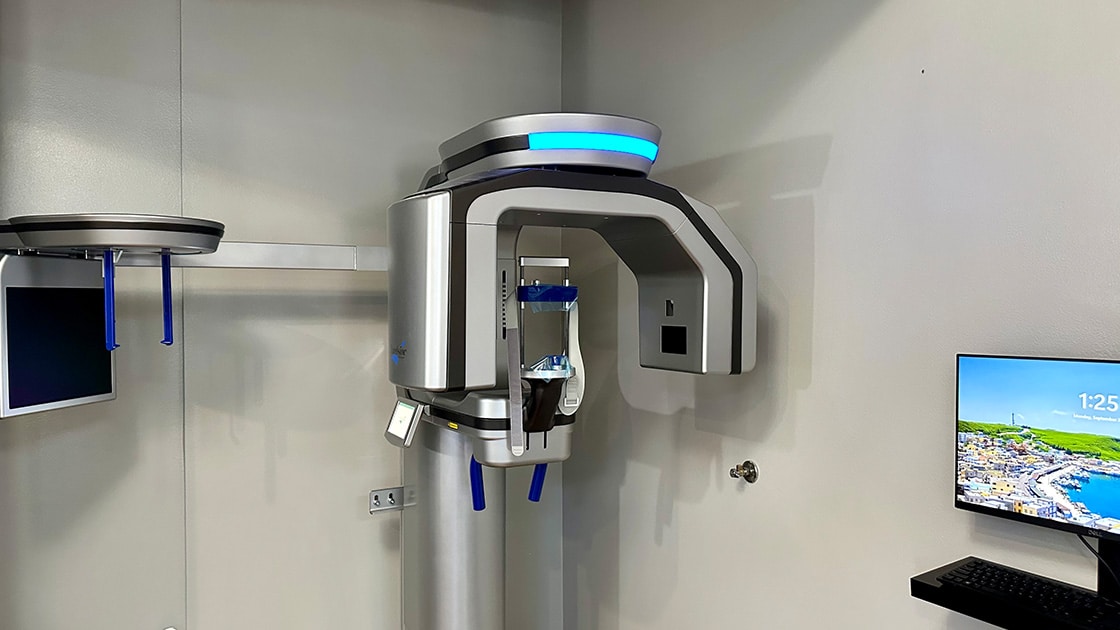
A 20-second cone-beam scan replaces guesswork with a 3D map of bone, nerves, and sinuses
Your implant positions are planned on screen — you can literally watch the plan
A custom guide seats over your teeth or gums during surgery, directing the drill path
Smaller openings, shorter chair time, and more predictable healing follow from accuracy
Guided workflows also enable same-day teeth protocols — the temporary bridge can be fabricated before surgery because the implant positions are known in advance.
Wondering what this means for your own case? A consultation at Select Dental Implants includes a cone-beam 3D scan and an honest, itemized answer — call (951) 672-6788 or request an appointment.
The recurring theme from thousands of patient stories: the process takes months, not days; bone quality drives everything; and the provider you choose matters more than the brand being advertised.
The five things nobody tells you
It’s a marathon: from consult to final teeth typically runs 3–12 months — the 3–6 month bone-fusing phase can’t be rushed
You might need a graft first: common, routine, and worth it — see how grafting works
Temporaries bridge the gap: with same-day protocols, you’re never left without teeth
They don’t feel exactly like natural teeth: implants lack the root’s sensory ligament — normal chewing power, slightly different feedback
Cheapest is expensive: revising a failed bargain implant costs more than doing it right once
Questions to ask any implant provider
Who places the implant, and how many cases like mine have they done?
What implant brand/system do you use, and why?
Is the quote complete — scan, surgery, parts, crown, follow-ups?
What happens (and what does it cost) if an implant fails?
Ask us the same questions — a practice confident in its answers will welcome them. That’s the point.
Wondering what this means for your own case? A consultation at Select Dental Implants includes a cone-beam 3D scan and an honest, itemized answer — call (951) 672-6788 or request an appointment.
Partly, and usually less than people expect. Dental plans that cover implants typically pay 40–50% of certain components — but an annual maximum of $1,000–$2,000 caps what you actually receive, and many plans still classify the surgical placement itself as excluded. The crown and extraction are far more likely to be covered than the implant post.
The confusion is structural. A dental implant isn’t one billable item; it’s three or four, and your plan may treat each one differently. Understanding that split is the difference between a nasty surprise and a plan you can budget for.
The four parts your plan looks at separately
Component
What it is
Typical coverage reality
Extraction (if needed)
Removing the failing tooth
Most commonly covered — often at 50–80%
Bone graft / sinus lift
Rebuilding the foundation
Sometimes covered, frequently denied as ‘not medically necessary’
Implant post (surgical placement)
The titanium root
The most often excluded piece; some plans call it elective
Abutment + crown
The connector and visible tooth
Most likely to be covered, often at the major-restorative tier (~50%)
General patterns across US dental plans; your specific policy language governs.
This is why two people with ‘the same’ insurance can get wildly different reimbursements on identical treatment. It’s also why we verify your benefits in writing before treatment rather than estimating — see our 2026 implant cost guide for the full price picture.
The annual maximum is the real ceiling
Most dental plans cap total annual benefits at roughly $1,000–$2,000. Even a generous plan paying 50% of a $5,000 single implant would owe $2,500 — but it stops at your maximum. In practice that means a single implant frequently exhausts your entire year of benefits, and a full-arch case exhausts it many times over.
Ask your plan three questions: Is implant surgery a covered benefit at all?
What is my remaining annual maximum this calendar year?
Is there a waiting period or a missing-tooth clause on my policy?
The missing-tooth clause
Many policies contain a clause excluding replacement of teeth that were already missing before the policy began. If you lost the tooth years ago and changed jobs since, this clause alone can void implant coverage regardless of everything else. It’s one of the first things worth checking.
Phasing treatment across two benefit years
Because maximums reset annually, larger cases can often be sequenced to use two years of benefits: extraction and grafting in one calendar year, implant placement and restoration in the next. Healing time between stages makes this clinically natural anyway — the biology and the billing calendar happen to line up. We build phased plans routinely when it saves real money.
Medicare, Medicare Advantage, and HSA/FSA
Original Medicare (Parts A and B) generally does not cover dental care, including implants and dentures. Some Medicare Advantage plans include a dental allowance that can offset part of the cost — typically a fixed annual dollar amount rather than a percentage. Check your plan’s specific dental rider.
HSA and FSA funds do apply to dental implants as a qualified medical expense, which effectively gives you a pre-tax discount. For many patients this is the most overlooked savings on the list.
Financing when insurance falls short
Healthcare financing such as CareCredit spreads treatment across monthly payments, often with promotional interest-free periods for shorter terms. Between a phased plan, insurance benefits, HSA/FSA dollars, and financing, most patients find a workable path — the key is building the plan with real numbers up front rather than discovering the gap mid-treatment.
Wondering what this means for your own case? A consultation at Select Dental Implants includes a cone-beam 3D scan and an honest, itemized answer — call (951) 672-6788 or request an appointment.
Frequently Asked
Why do dental plans cover a bridge but not an implant?
Some plans apply a ‘least expensive alternative treatment’ clause, reimbursing only what a bridge would have cost even when an implant is the better clinical choice. You can still choose the implant — the plan simply pays the lower amount and you cover the difference.
Will medical insurance ever pay for dental implants?
Occasionally, when tooth loss results from an accident, a tumor, or a documented medical condition rather than decay. It requires medical necessity documentation and is the exception rather than the rule, but it’s worth investigating in trauma and post-oncology cases.
Should I wait until January for my benefits to reset?
Sometimes yes — if you’re close to your maximum and the case isn’t urgent, waiting a few weeks can add a full year of benefits. If you’re in pain or bone is actively resorbing, waiting costs more than it saves.
Do you verify my insurance before treatment?
Yes. We verify benefits and give you an itemized treatment plan showing the estimated insurance portion and your out-of-pocket cost before you commit to anything.
It means you need a foundation before you need an implant — not that implants are off the table. Bone grafting, sinus lifts, angled placement, and narrower implant designs solve the large majority of low-bone cases. A cone-beam 3D scan is what turns the question from opinion into measurement.
Being told no by one office is one of the most common reasons patients arrive here. Sometimes the earlier assessment was right about the bone and wrong about the options; sometimes it was based on a two-dimensional X-ray that simply can’t measure what a 3D scan can.
Why the bone disappears in the first place
A tooth root does more than hold a tooth — it stimulates the bone around it every time you chew. Remove the root and that stimulus stops. The jawbone begins remodeling away almost immediately, and the fastest loss happens in the first year after extraction. Over years and decades, a ridge that once held molars can narrow to a thin blade of bone.
This is the same process behind the sunken facial appearance common in long-term denture wearers, and the reason dentures need relining as they stop fitting. An implant restores the stimulus, which is why implants preserve bone rather than merely replacing a tooth.
The five ways we build a foundation
1. Socket preservation (prevention)
Placed at the same appointment as an extraction, grafting material fills the empty socket and dramatically limits collapse. It adds a modest cost at the time of extraction and frequently prevents a much larger graft later. If you’re facing an extraction now and implants are even a possibility later, ask about this.
2. Ridge augmentation
For ridges that have already narrowed, graft material rebuilds width and height. The graft matures over roughly four to six months into your own living bone, at which point it holds an implant like native tissue.
Upper molars sit directly beneath the sinus cavity, and after extraction the sinus floor tends to drop into the vacated space. A sinus lift raises the membrane and places graft material beneath it, creating the vertical height an implant needs. It’s a routine, well-documented procedure.
4. Angled and All-on-4 placement
Rather than adding bone, this approach uses the bone you still have. Tilting the rear implants engages the denser bone at the front of the jaw and often avoids grafting entirely — the core engineering insight behind All-on-4 full-arch treatment.
5. Narrow-diameter implants
Where the deficiency is width rather than height, a narrower implant can fit bone that won’t accept a standard-diameter post. Not right for every position or every bite force, but a real option in selected cases.
What grafting actually costs and how long it takes
Procedure
Typical range
Healing before implant
Socket preservation
$400 – $1,200
Often same-visit placement, or 3–4 months
Ridge augmentation
$800 – $3,500
4–6 months
Sinus lift
$1,500 – $4,500
4–9 months
Typical US ranges; your itemized quote follows your 3D scan.
Timelines feel long because bone biology is genuinely slow, and there’s no safe way to compress it. What you gain is an implant that lasts decades instead of one placed into a foundation that can’t hold it.
Getting a second opinion the right way
Bring any imaging you already have — even a panoramic X-ray gives useful history
Ask specifically whether a cone-beam 3D scan was used for the original assessment
Ask what the specific deficiency is: width, height, or density (they have different solutions)
Ask what the plan would be if grafting were done — a clear answer means someone actually measured
Wondering what this means for your own case? A consultation at Select Dental Implants includes a cone-beam 3D scan and an honest, itemized answer — call (951) 672-6788 or request an appointment.
Frequently Asked
Where does the bone graft material come from?
Options include your own bone, processed donor bone, bovine-derived mineral, or fully synthetic material. All are well studied; the choice depends on the size and location of the defect. Your surgeon should explain which is planned and why.
Is bone grafting painful?
Most patients describe it as comparable to or milder than an extraction, managed with over-the-counter medication for a few days. Sedation options are available for longer or more complex grafting appointments.
Can I skip the graft and just get a smaller implant?
Sometimes, and we’ll say so when it’s true. But placing an implant into insufficient bone risks failure, and revising a failed implant costs more than grafting properly the first time.
How do I know if I really need grafting or I’m being upsold?
Ask to see your own cone-beam scan on screen and have the measurement pointed out. Bone volume is a number, not an opinion — a provider who plans in 3D can show you exactly what’s there.
Most patients say the extraction was worse. Both procedures are painless during treatment thanks to local anesthesia — but an extraction leaves an open socket, while an implant site is a clean, planned surgical placement that typically heals with less inflammation.
What implant recovery really feels like
Soreness peaks in the first 24–48 hours — most patients rate it 2–4 out of 10 and manage with over-the-counter ibuprofen or acetaminophen. Swelling eases from day 3; most people are back to work within a day or two. By the end of the first week, tenderness is usually minor.
Making it easier still
Sedation options from nitrous oxide to oral sedation for anxious patients
Cold compresses and soft foods for the first days
No straws, no smoking — protects the surgical site while it heals
Written aftercare instructions and a direct line to our team
The fear of implant pain keeps people in failing teeth and loose dentures for years. The consistent report from patients on the other side: ‘nowhere near as bad as I expected.’
Wondering what this means for your own case? A consultation at Select Dental Implants includes a cone-beam 3D scan and an honest, itemized answer — call (951) 672-6788 or request an appointment.